
Your complete guide to cleaner, better-tasting drinking water on Vancouver Island — from how RO systems work to professional installation by Canadaqua, Nanaimo's trusted water filtration specialists.
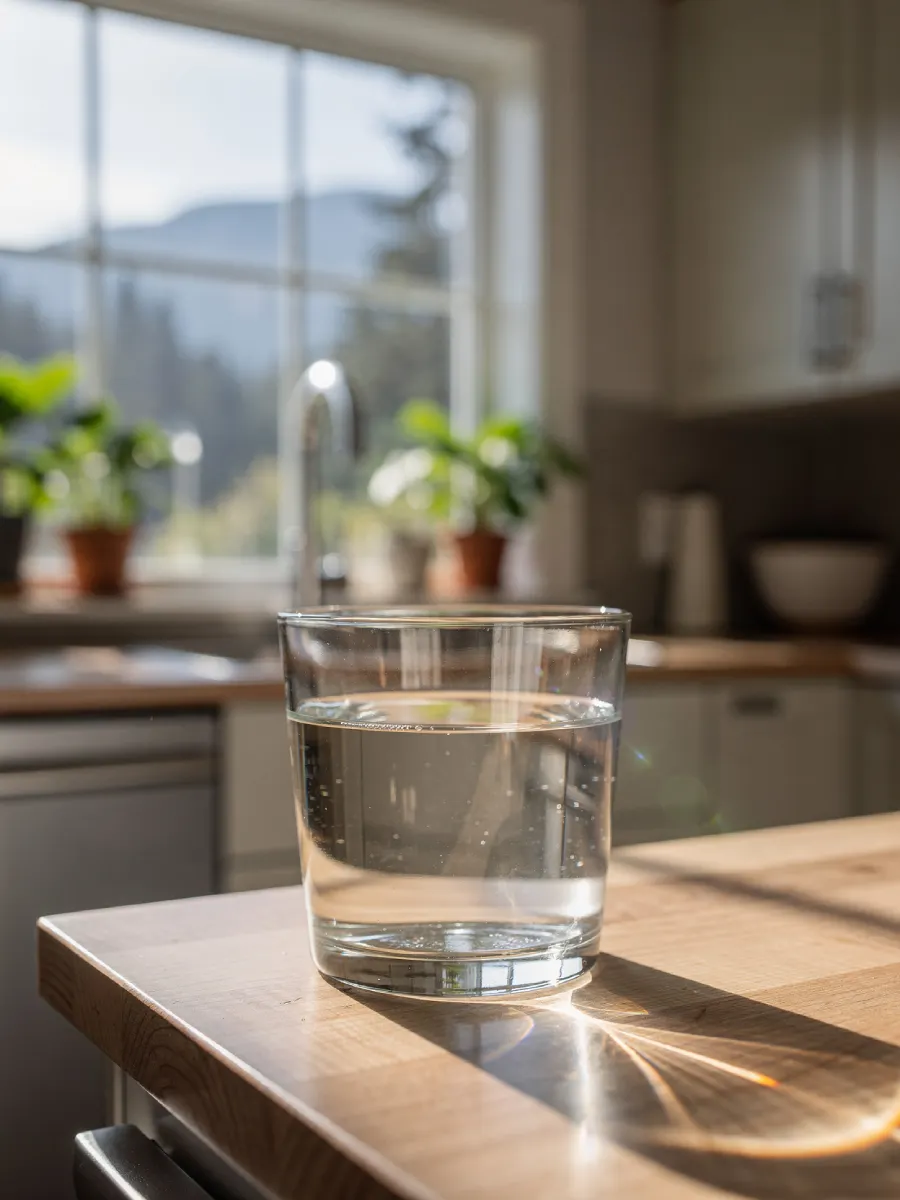
A reverse osmosis (RO) system forces your household water through a series of carefully engineered filtration stages, each targeting a specific class of contaminants. The result is exceptionally pure drinking water delivered through a dedicated faucet at your kitchen sink. Unlike simple pitcher filters, a multi-stage RO system addresses sediment, chemicals, dissolved solids, heavy metals, and more — all before the water reaches your glass.
Each stage plays a distinct and essential role in the purification process. Skipping or neglecting any stage reduces overall system effectiveness, which is why Canadaqua designs and installs complete, properly sequenced systems tailored to your home's specific water quality needs.
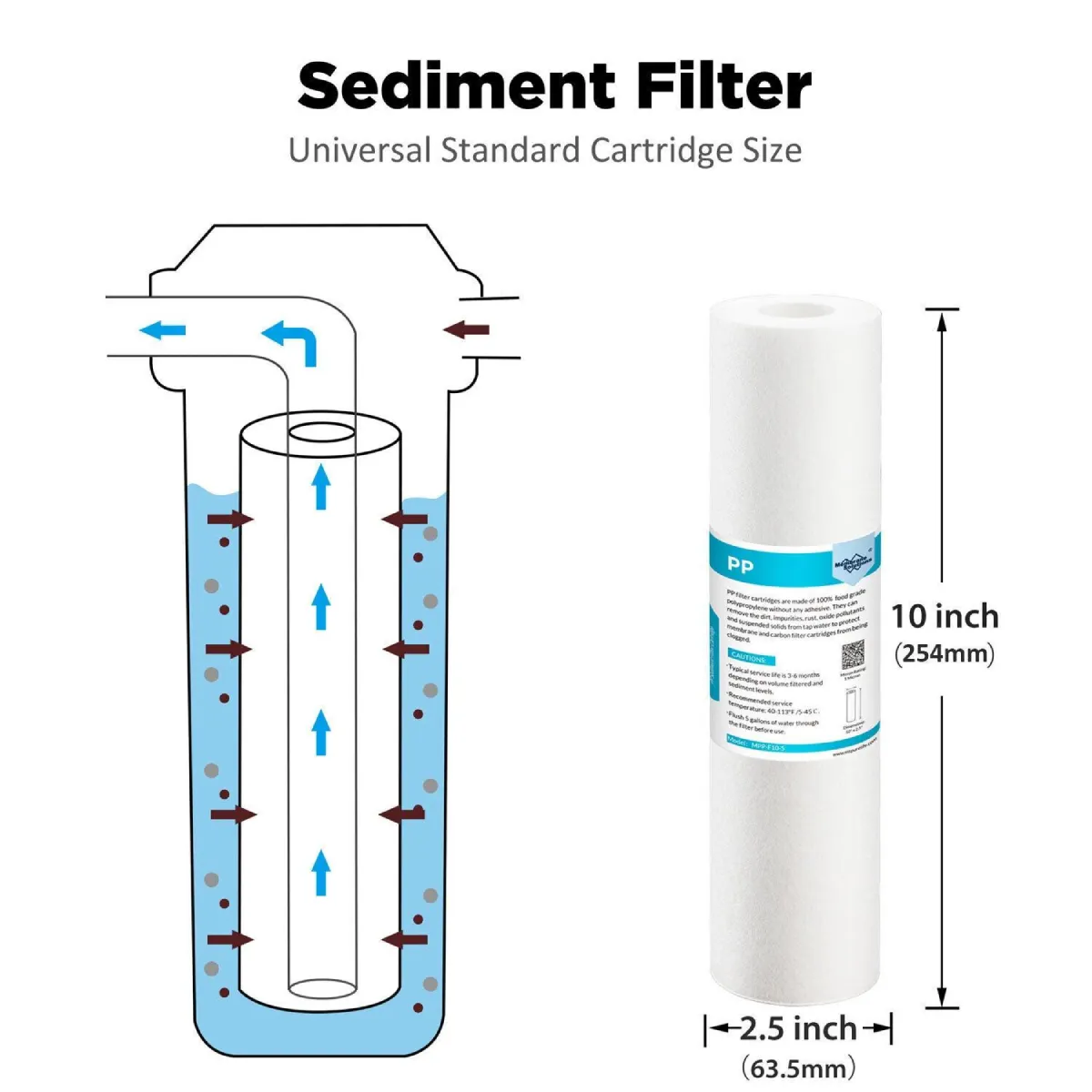
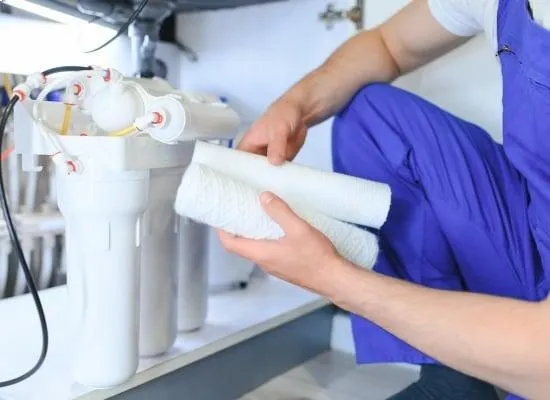
The sediment filter is the entry point of any reverse osmosis system and one of the most important components for protecting everything downstream. As water enters from your cold-water supply line, it first passes through this filter, which physically traps visible and microscopic particles suspended in the water.
On Vancouver Island — particularly for homes served by older municipal infrastructure or private wells — sediment can be a significant concern. The sediment filter captures:
Without this stage, sediment would accumulate on the activated carbon filter and RO membrane, dramatically shortening their service life and reducing filtration efficiency. The sediment filter is the system's sacrificial protector — inexpensive to replace and invaluable in function.
Recommended Replacement
Every 3 to 6 months, or more frequently if your water source carries heavy sediment loads.
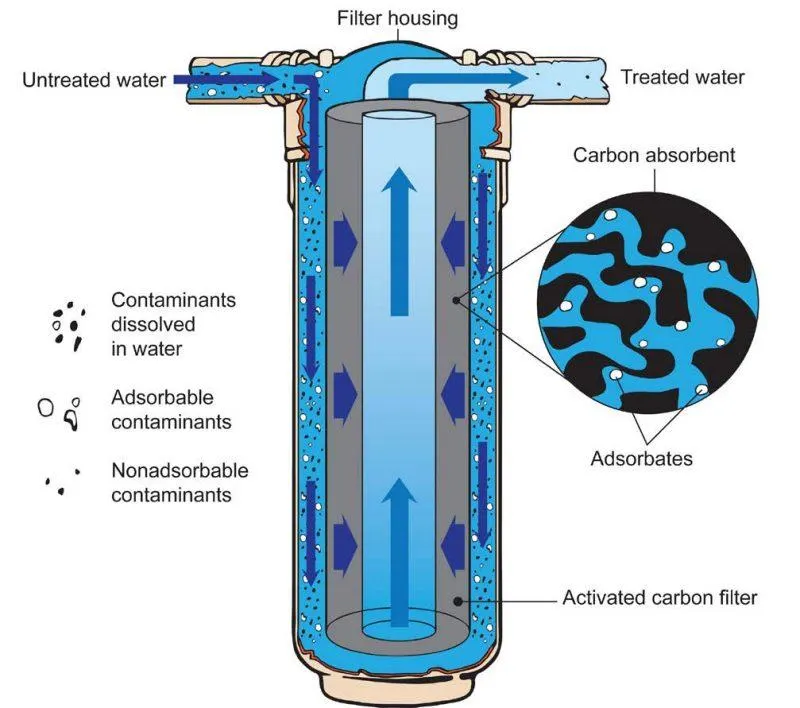
Once the sediment filter has removed physical particles, water flows into the activated carbon filter. This stage uses a highly porous carbon medium — typically derived from coconut shell or coal — that adsorbs chemical contaminants as water passes through its vast internal surface area.
Activated carbon is particularly effective at reducing:
This stage is critically important for protecting the RO membrane in Stage 3. Chlorine is highly oxidizing and can degrade the membrane material rapidly if not removed first. Consider the carbon filter the membrane's bodyguard — it takes the chemical hit so that the membrane can focus on dissolved solids.
Recommended Replacement
Every 6 to 12 months, depending on chlorine levels and water usage.
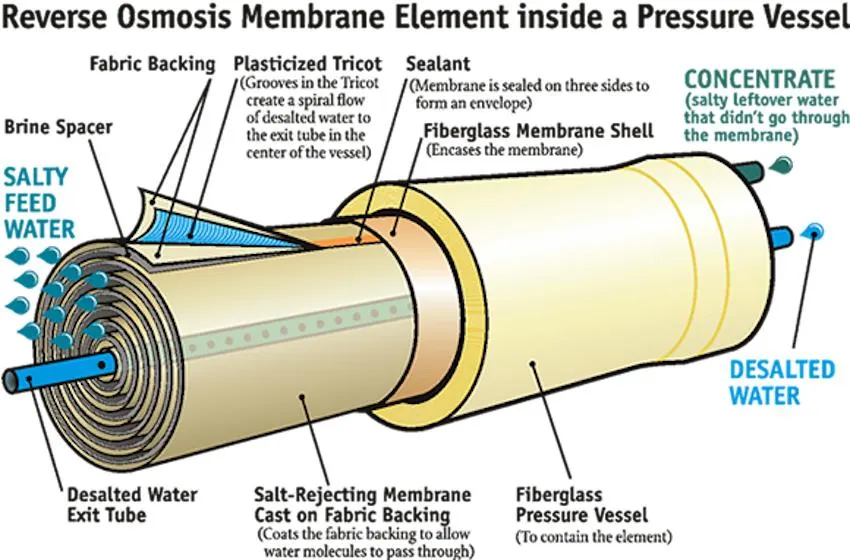
The reverse osmosis membrane is the most sophisticated and consequential component in the entire filtration system. It is a semi-permeable membrane with pores so fine — approximately 0.0001 microns — that water molecules pass through while dissolved contaminants are physically blocked and flushed away to the drain line.
The RO membrane is capable of removing an impressive range of dissolved contaminants that no other filtration stage can address:
During the filtration process, water is split into two streams: purified permeate water, which passes through the membrane to the storage tank, and concentrate (reject water), which carries the trapped contaminants down the drain. This is a normal and necessary part of the RO process.
Recommended Replacement
Every 2 to 3 years, depending on water quality and usage patterns.
Because the RO membrane filters water slowly — typically 50 to 100 litres per day — purified water is collected and stored in a pressurized tank beneath the sink. This ensures you always have a ready supply of clean water on demand, rather than waiting for filtration to occur each time you open the tap.
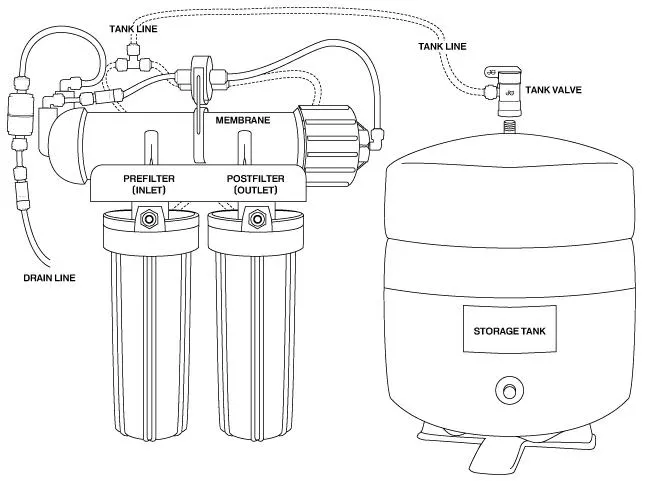
A standard residential storage tank holds between 2 and 4 gallons (approximately 7 to 15 litres) of purified water. The tank uses an internal air bladder to maintain pressure, pushing water up to the faucet when needed.
The final stage before water reaches your glass is the post-carbon (or "polishing") filter. Even after passing through three rigorous filtration stages and sitting in a storage tank, trace odours or tastes can occasionally develop.
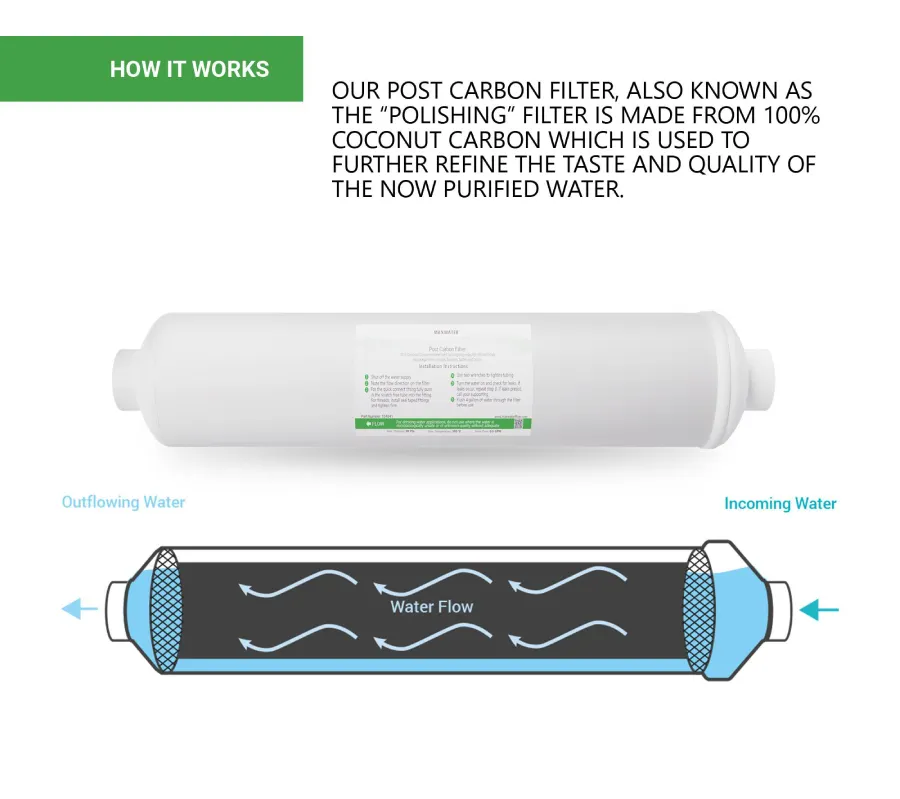
The post-carbon filter acts as a final quality checkpoint, adsorbing any residual impurities that may have been picked up during storage. This stage ensures that your water tastes as fresh and clean as possible — crisp, neutral, and free from any "plastic" or "flat" taste.
One of the defining features of an under-sink RO system is the dedicated faucet installed specifically for purified drinking water. This separate tap — typically mounted through an existing hole in the sink deck or countertop — ensures that your filtered water is never mixed with regular household water.
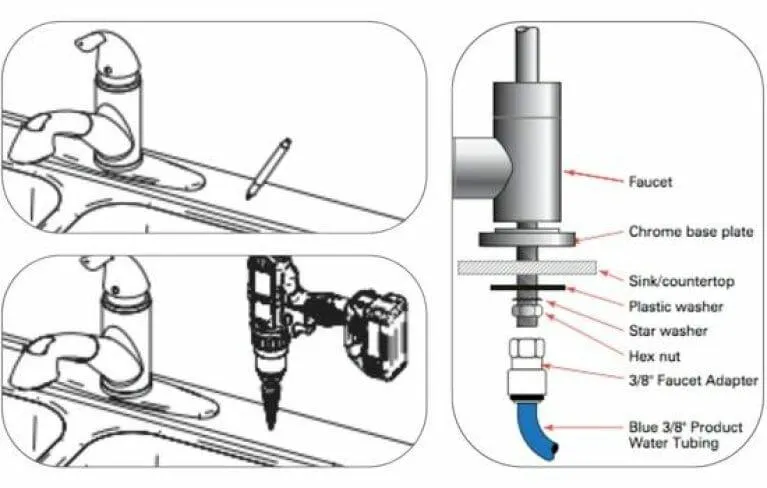
Purified water is always kept separate from the main supply.
Fill glasses, water bottles, kettles, and cooking pots directly from the faucet.
Having a distinct tap reminds household members to use filtered water for drinking and cooking.
Canadaqua offers a range of faucet finishes to complement your kitchen décor.
Adds back beneficial calcium and magnesium to restore natural pH and improve taste.
Provides an additional layer of protection against bacteria and viruses, especially for well users.
Maintains adequate pressure for consistent filtration efficiency and faster tank refills.
Smart add-ons for peace of mind and real-time readouts of water quality.
Professional Analysis
Canadaqua offers water testing services throughout Vancouver Island to determine exactly which filtration system is right for your home.
| Component | Interval |
|---|---|
| Sediment Filter | Every 3–6 months |
| Activated Carbon (Pre-filter) | Every 6–12 months |
| Post-Carbon (Polish Filter) | Every 6–12 months |
| RO Membrane | Every 2–3 years |
| UV Lamp (if installed) | Every 12 months |
Canadaqua offers filter replacement services throughout Vancouver Island. We can set up reminders and perform professional servicing.
Removes up to 99% of dissolved contaminants.
Eliminates chlorine, sulphur, and mineral flavours.
Replaces hundreds of plastic water bottles annually.
Purified water on demand at your sink.
Based in Nanaimo, Canadaqua is Vancouver Island's dedicated water treatment specialist — serving homeowners and renters from Victoria to Campbell River with expert advice, professional installation, and ongoing maintenance support.
Under-sink and countertop RO systems sized for your household, professionally installed.
Address sediment, chlorine, and hardness at the point of entry — protecting every tap.
Chemical-free ultraviolet sterilization systems for reliable protection against bacteria.
Scheduled filter replacements and system sanitization to keep your investment like new.
Serving Nanaimo, Parksville, Courtenay, Campbell River, Duncan, Victoria, and all communities in between.
Contact Canadaqua today for a water test, expert consultation, and professional installation tailored to your home.